Therapy Insights on Parenting, Couples, and Mental Health
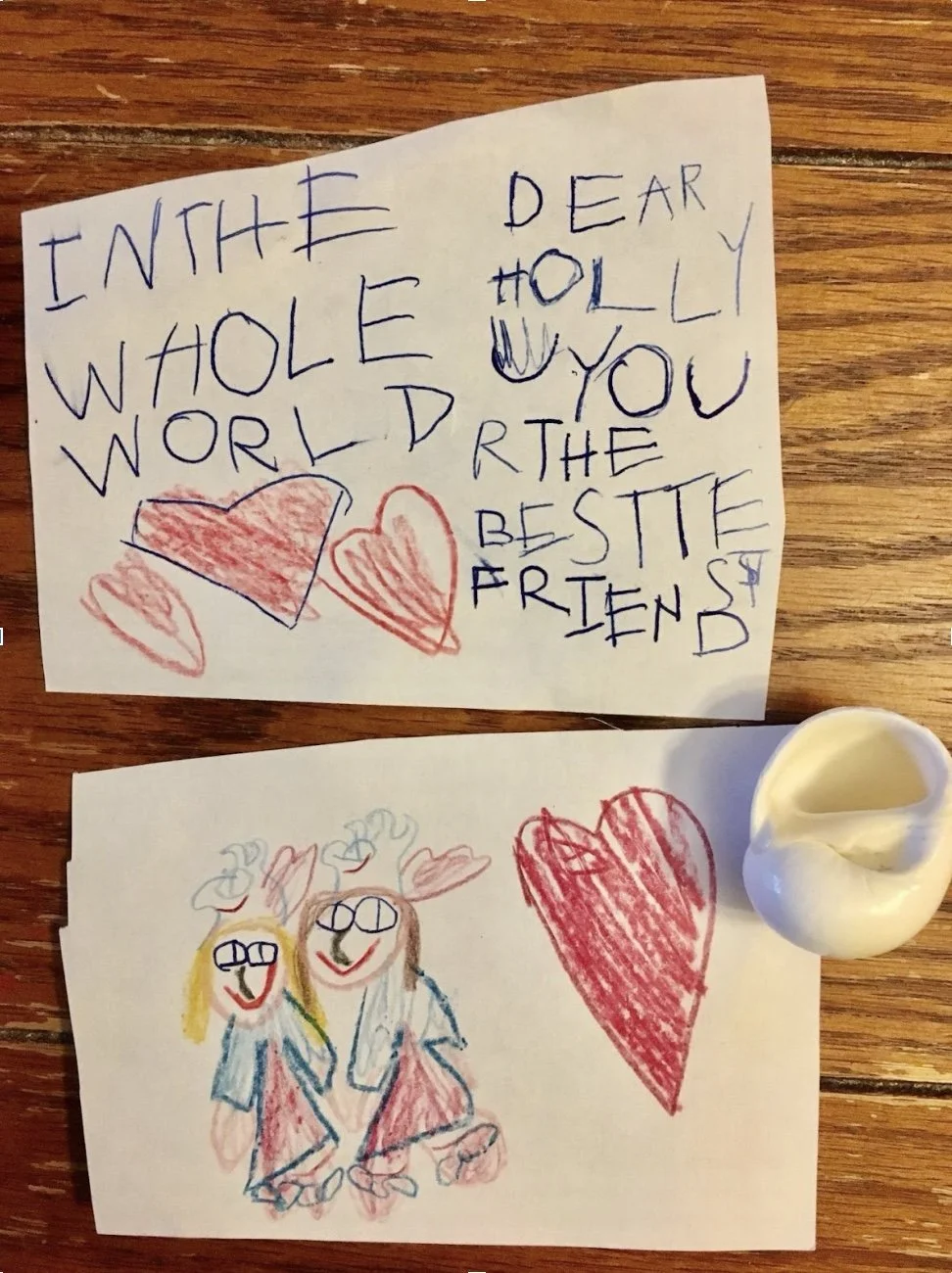
Valentine's Day and Beyond: Supporting Children's Social Growth
As a Child & Family Therapist Intern at Empower Family Therapy and mother of two school-age children, I've observed how school celebrations like Valentine's Day become important emotional touchpoints in children's lives. Through my professional training and personal experience, I've discovered these moments offer valuable insights into children's emotional development.
While parents may feel overwhelmed by the commercialization and pressure surrounding these celebrations, beneath the surface lies an opportunity to understand our children's social-emotional growth. When children deliberate over Valentine’s cards or navigate social expectations, they process deeper feelings about friendship, belonging, and self-expression.
In my play therapy sessions, I witness how these social experiences impact children throughout the year. Some express anxiety about meeting social expectations, while others struggle with the emotional intensity of the interactions. Through therapeutic play, children can process these feelings safely and naturally.
Even commercialized celebrations can become opportunities for emotional growth. By acknowledging our children's feelings—excitement, anxiety, or reluctance—we help develop their emotional awareness. Parents can support authentic connections by:
Letting children guide their participation level
Encouraging creative, low-cost expressions of friendship
Using experiences to discuss genuine relationships
Monitoring signs that children need extra support
While we can’t shield children from commercial influences, we can help them develop emotional tools to navigate these experiences authentically.
Here are some questions to ask your child that offer the opportunity to deepen the connection –
What made you feel proud today?
Did anyone do something that made you feel special?
Would you like to talk about anything that felt hard today?
How did it feel to give the Valentines to your classmates?
What do you think makes someone a good friend?
Written by Kelly Owen, M.S.
Child and Family Therapist Intern
If you’d like to learn more about supporting your child’s emotional development, contact us at hello@empowerfamilytherapy to explore how Play Therapy can help your child build lasting social-emotional skills.
How Can I Tell if My Child is Struggling with Mental Health Issues?
As parents, we know you want to ensure your children are thriving emotionally and mentally. However, recognizing when your child may be struggling with mental health issues can be challenging. Awareness is the first step in providing the support they need.
Signs to Look For
Changes in Behavior or Mood
Pay attention to any noticeable shifts in your child’s demeanor. This can include increased irritability, sadness, or mood swings that seem more extreme than usual.Withdrawal from Friends and Activities
If your child suddenly loses interest in hobbies they once enjoyed or starts avoiding social interactions, it may be a red flag. Isolation can indicate underlying emotional struggles.Declining Academic Performance
A sudden drop in grades or a lack of motivation towards schoolwork may suggest that your child is dealing with more than just academic challenges.Changes in Sleep or Appetite
Alterations in sleeping patterns (insomnia or oversleeping) and significant changes in appetite can be indicative of mental health issues.Physical Symptoms
Frequent headaches, stomachaches, or other unexplained physical complaints can often be manifestations of anxiety or stress.
When to Seek Help
If you notice a combination of these signs persisting over time, it’s important to take action. Trust your instincts as a parent. Seeking professional help can provide your child with the tools they need to cope. If you’re not sure if you should seek help yet, or have questions about if what you’re noticing with your child is ‘normal’, please reach out for a consultation with one of our highly trained child and family therapists.
Conclusion
Remember, being proactive is vital. If you’re concerned about your child’s mental health, reach out for support. Empower Family Therapy is here to help guide you and your family through these challenges. Our child and family therapists have immediate availability for new clients in our Oak Park, IL and Lincoln Park, IL offices, as well as virtually throughout the state of Illinois!
What to Expect from Your First Call & First Therapy Session
Has the big scary 'Unknown' of what to expect from therapy held you back from reaching out to a therapist? This family therapy video details the basics of what to expect from your first call and your first therapy session. It's not as scary as you think - Promise!
Reaching out to a therapist is scary.
Not knowing what will happen at your first scheduled appointment is even scarier.
We know that starting therapy can feel like a big step, and for many people, the uncertainty of what to expect holds them back from reaching out. So, let’s take some of that mystery out of the process! Here’s a simple breakdown of what happens during your first phone call and therapy session with us—or with most therapists, really.
The First Phone Call: What to Expect
Every therapist has their own way of doing things, but at Empower Family Therapy, here’s how we get started:
1. Reaching Out
When you call, you’ll likely get our voicemail because we’re often in sessions. But don’t worry! Just leave a message, send an email, or even shoot us a text. Let us know you're interested, and we’ll set up a time for a brief phone consultation.
2. The Phone Consultation
Since it can be tough to catch people at the right moment, we schedule these calls ahead of time. That way, we can both set aside a quiet moment to chat.
During this 15-minute call, we’ll ask a few key questions:
What’s bringing you to therapy?
Why now?
What changes are you hoping to see?
Who would you like involved in your therapy journey?
And one of our most frequently asked questions: Do you have any questions for us? Seriously, ask anything! There are no dumb questions in therapy.
3. Logistics & Next Steps
We’ll talk about things like payment options, our home-based therapy services, and scheduling. If you’re ready to book a session right then, we’ll get it on the calendar. If you need more time to think it over or discuss with a partner or family member, that’s totally fine. Just reach out when you're ready.
Once we schedule, we’ll send you an email confirming the appointment and attaching consent forms. We like to send these ahead of time so you can review them at your own pace and bring up any questions—no surprises!
Your First Therapy Session: What to Expect
1. No Need to Clean for Us!
If we’re meeting at your home, don’t stress about tidying up. Seriously, we’re not here to judge your housekeeping skills.
When we arrive, we usually knock instead of ringing the doorbell (because, you know, sleeping kids). We’ll introduce ourselves, ask if we should take off our shoes, and check in on how your day is going. Then we’ll find a comfortable place to talk—the living room, kitchen table, wherever feels best for you.
2. Quick Paperwork Review
Since you’ve already had a chance to look over the consent forms, we’ll just go over any lingering questions and key points. This keeps things smooth and saves time so we can focus on what really matters.
3. Diving In
From there, we’ll jump into what brought you to therapy. This first session builds on our phone consultation, but we’ll go more in-depth.
No pressure, though. You can share at your own pace.
Our goal is to help you define what you want to change and figure out how we can make that change happen. Therapy is about you and your goals, and we’re here to help you get there.
4. Wrapping Up
Our sessions typically run about 50 minutes, with the last 10 minutes dedicated to wrapping up and scheduling future appointments. At the end of our session, we’ll ask if you want to book another session.
And just so you know, there’s no pressure.
If you’re unsure, it’s totally fine to wait and decide later. Think of it like a hair appointment or a dentist visit—you can schedule on the spot, or you can hold off. We’d rather you be sure than feel obligated.
5. Good Fit Matters
Therapy isn’t one-size-fits-all. The most important factor in therapy success is the therapeutic relationship—not the specific type of therapy, not the years of training, but the connection between client and therapist. If one of us isn’t the right fit for you, that’s totally okay! Our priority is making sure you get the support you need, even if that means referring you to someone else.
6. Payment & Next Steps
Before we leave, we’ll confirm payment and any upcoming sessions. And then? You might find yourself saying, Wow, that wasn’t so bad! Maybe we’ll meet again next week, in two weeks, or maybe not at all. Either way, you’re in control of your therapy journey.
Starting therapy doesn’t have to be scary. Our goal is to make this process as comfortable and accessible as possible. If you have any other questions, don’t hesitate to reach out at info@empowerfamilytherapy.com.
We’re happy to chat and help you figure out if therapy is right for you!
Thanks for stopping by,
The Empower Family Therapy Team
3 Reasons Why Giving a Hug is the Least You Can Do This Holiday Season
If you’re not looking forward to seeing a certain family member (or all your family members, no shame here) this holiday season, you’re not alone.
When standing toe to toe with a task that feels much too big - like enjoying everyone’s company this holiday season- it is always powerful to start with one small change. There is one, scientifically proven, small change that you can make this year to benefit those you come in contact with and yourself.
Here are 3 reasons why you should be extra generous with the hugs this holiday season, even to those you’re not the most thankful for:
The weather is cooling down, the days are getting shorter, and the holidays are creeping near. We all hope for a Hallmark-worthy holiday: you know it… the loved ones gathered around smiling and well-posed, the iconic meal perfectly plated with ease, and everyone enjoying each others’ company with thankful hearts and stimulating conversation….
….Yet, those are hard to come by. Instead, the kids chasing each other around with Nerf guns, all the guests are congregating in the kitchen as you cook, and you remember that there’s no possible way all this food can be served hot. And, without fail, that certain someone will have one-too-many glasses of wine - despite your valiant efforts to keep the bottle as far away from them as possible on the table. The conversation will turn awkward and uncomfortable, and you’ll remember why you said last year you were going to throw in the towel and start using the holiday time for personal vacation.
If you’re not looking forward to seeing a certain family member (or all your family members, no shame here) this holiday season, you’re not alone.
When standing toe to toe with a task that feels much too big - like enjoying everyone’s company this holiday season- it is always powerful to start with one small change.
There is one, scientifically proven, small change that you can make this year to benefit those you come in contact with and yourself.
3 reasons why you should be extra generous with the hugs this holiday season:
(even to those you’re not the most thankful for)
IT’S CHEMICALLY GOOD FOR THEM, AND FOR YOU
It’s pretty common knowledge that all the lovey-dovey stuff releases oxytocin, the “cuddle hormone,” which gives us that cozy blanket, fuzzy socks, and warm cocoa on a wintery day feeling. Oxytocin also, “promotes feelings of devotion, trust, and bonding,”
and can even make people, “less reactive when faced with potentially threatening experiences.” When released this powerful hormone not only injects you with feelings of smiles and rainbows, but it also fights the stress hormone cortisol that produces tension and panic.
Research by Michael Murphy, PH.D., from Carnegie Mellon University shows that an increase in oxytocin is “linked to less of a ‘fight-or-flight’ response to stressful situations.” More of the feel-good hormones leads us to feeling safer, more cared for, and less reactive. So incorporating more hugs can not only make you feel happier in the moment, it can also prevent the mid-dinner political debate from becoming too threatening. So instead of focusing on spreading the cheer this holiday season, prioritize spreading the oxytocin.
2. IT CAN KEEP YOU AND YOUR HEART HEALTHIER
Although it may feel as if getting physically close to your family this holiday season may make you physically ill, research shows that hugging it out actually makes you healthier.
In addition to lower blood pressure and heart rates, research shows that the increase of oxytocin, provided to you and your loved one during a hug, can help stabilize your immune systems. Carnegie Mellon research study found that individuals who received more hugs and had more social support had less severe symptoms of illness. When we are threatened, or under stress, our immune system responds accordingly, and acts more aggressively than it may need to, leading to increased risk of illness.
If you tend to battle colds when the weather changes for good and the snow starts to stick, being a generous hugger may help you give your immune system the TLC it needs to keep it in check. Murphy added a personal anecdote to his findings, stating that “[He is] far more likely to offer a hug than [he] used to be,” and that it’s now his, “‘go-to’ response,” for when his own loved ones are distressed. See! It even changed the scientist’s ways!
3. THE MORE THE MERRIER
It may be obvious that hugs are good for everyone, and provides both the young and the young at heart, with a more solid sense of belonging. But, there are a few people at your dinner table that may benefit even more than the others from some extra bear hugs this year - the young and the old.
A UCLA study showed that a loving, nurturing, and affectionate environment is linked to a child’s long-term health trajectory. There is a link between how much touch a child receives and their ability to manage and cope with stress when they reach adulthood. So when the kids start to fight and get stir-crazy this year, be sure to give them an extra tight squeeze for their future.
Older adults need more hugs too; they benefit the most from physical contact and the health benefits associated with hugs. In a Swedish study, the older adults who received hugs and physical touch, connected with friends and visitors, and were otherwise active socially, had a tendency to thrive more than less social residents. Proving that both physical and social connectino are vital to keeping our loved ones healthy and happy.
You may not be eager to invite everyone in your family over for the big holiday meal and set up a hugging circle; I get it.
But, maybe the research will marinate on your little Grinch heart and make it grow a few sizes larger this holiday season.
Maybe you will funnel your holiday stress and worry into focusing on making one small change this year, for the betterment of you and those around you.
We all wish for good health and happiness for ourselves and our loved ones during the holiday season - and now we can make that wish come true with a simple hug.
Hugging is not for everyone. This post is not meant to encourage a compromise of personal boundaries when it comes to emotional and physical comfort. Always trust your gut when it comes to connecting with others both emotionally and physically. If a hug feels unsafe, don’t do it. Your sense of safety is always the priority. *
Empower Family Therapy wishes you and your loved ones
a safe, happy, and healthy holiday season.
Negotiating Consequences
Negotiating consequences WITH your kid is an easy tweak to make, that results in more ‘buy in,’ and compliance from your kid as they are actively engaged and participating in the process of determining a consequence. It offers autonomy to your youth in a time when they may feel powerless to the consequence of not meeting and expectation
Parents dread giving their kids consequences.
Your kid then pouts, storms off, gives them the silent treatment, or worse - makes the punishment a punishment for you. You know… the good ol’ ‘No Phone for a Week,’ consequence only to have your kid pester and bother you begging for it back, constantly begging to use your phone, or being out of contact for hours because ‘they don’t have a phone.’ It’s a tactic kids and teens use to wear down their parents, and more often than not it works! But, don’t worry - there is a way to avoid this resistance regarding consequences.
The answer is ….. Drum roll, please…..
Negotiation.
“My kid has been struggling at school and at home a lot lately. We’ve taken away his phone and grounded him from seeing friends outside of school, but there’s not much improvement and we are running out of things to take away! He seems to care less and less every time we give a consequence.” - local parent
Often times as parents, we feel the need to utilize our power and prescribe a strict consequence regiment. We want to be sure we are addressing the negative behaviors, but fear piling up the consequences in fear that our kid will revolt and make our lives a living hell. Plus, who has extra time and brain power to monitor 5 different consequences for one kid? Let alone if you have more than one child! Phew. No way.
Negotiating consequences WITH your kid is an easy tweak to make, that results in more ‘buy in,’ and compliance from your kid as they are actively engaged and participating in the process of determining a consequence. It offers autonomy to your youth in a time when they may feel powerless to the consequence of not meeting and expectation. Teens and youth tend to describe this method as feeling, “more fair.”
The only catch (of course, there’s always a little catch) to this strategy is that it takes some preparation on your part to come up with options ahead of the conversation. But, if you are following our tips from 5 Ways You’re Allowing Your Kids to Beat You at Your Own Consequences, you should already be taking a cool-down time prior to prescribing a consequence, and during that time you can prepare 2 logical consequences to address the behavior/missed expectation.
Here are a few examples:
Would you prefer to lose dessert tonight or go to bed 30 minutes earlier?
Would you prefer to lose your phone for the day or have to vacuum/mop the house?
Would you prefer to lose screen time for the week or cancel your weekend sleepover plans?
I want to clarify that including your youth in negotiating consequences is NOT a form of compromising: we are not bargaining on the consequence, rather we are introducing two equivalent options for them to make a choice.
Of course, this strategy does not work in every situation and should not completely replace assigning a singular, specific consequence. I suggest parents utilize this strategy when children/teens react appropriately to the discussion of the expectation not being met, as a token of appreciation for good participation during the interaction. If there is arguing, tantruming, or talking back. it may not be effective or appropriate to offer them a choice in the consequences this time around.
For many of you this will help you collaborate better with your youth, and avoid consequences becoming a punishment for you as the parent. If you’d like more support with implementing these tips with your youth, reach out to us directly by emailing Tina@EmpowerFamilyTherapy.com
Consequences still not going smoothly with your kid? Check out our blog post about how your kids are outsmarting you when it comes to consequences