
Therapy Insights on Parenting, Couples, and Mental Health

Tina Shrader Tina Shrader

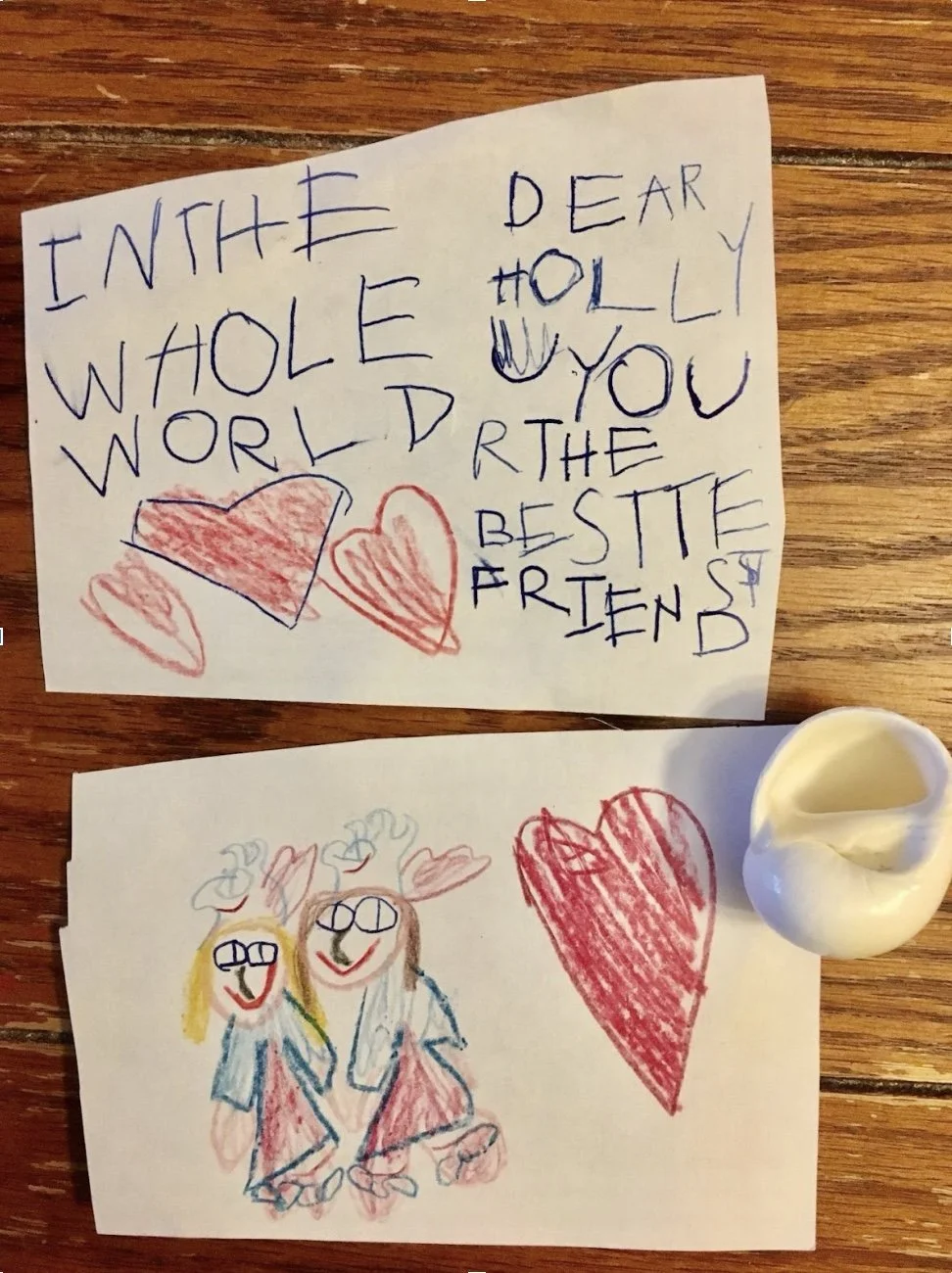
Valentine's Day and Beyond: Supporting Children's Social Growth

As a Child & Family Therapist Intern at Empower Family Therapy and mother of two school-age children, I've observed how school celebrations like Valentine's Day become important emotional touchpoints in children's lives. Through my professional training and personal experience, I've discovered these moments offer valuable insights into children's emotional development.

While parents may feel overwhelmed by the commercialization and pressure surrounding these celebrations, beneath the surface lies an opportunity to understand our children's social-emotional growth. When children deliberate over Valentine’s cards or navigate social expectations, they process deeper feelings about friendship, belonging, and self-expression.

In my play therapy sessions, I witness how these social experiences impact children throughout the year. Some express anxiety about meeting social expectations, while others struggle with the emotional intensity of the interactions. Through therapeutic play, children can process these feelings safely and naturally.

Even commercialized celebrations can become opportunities for emotional growth. By acknowledging our children's feelings—excitement, anxiety, or reluctance—we help develop their emotional awareness. Parents can support authentic connections by:

  • Letting children guide their participation level

  • Encouraging creative, low-cost expressions of friendship

  • Using experiences to discuss genuine relationships

  • Monitoring signs that children need extra support

While we can’t shield children from commercial influences, we can help them develop emotional tools to navigate these experiences authentically.

Here are some questions to ask your child that offer the opportunity to deepen the connection –

  • What made you feel proud today?

  • Did anyone do something that made you feel special?

  • Would you like to talk about anything that felt hard today?

  • How did it feel to give the Valentines to your classmates?

  • What do you think makes someone a good friend?

Written by Kelly Owen, M.S.

Child and Family Therapist Intern

If you’d like to learn more about supporting your child’s emotional development, contact us at hello@empowerfamilytherapy to explore how Play Therapy can help your child build lasting social-emotional skills.

Read More
family, parenting, teens, therapy Tina Shrader family, parenting, teens, therapy Tina Shrader

What Your Teen Wants to Know About Suicide & What You, as a Parent, Should Say

If you have a middle or high school student in Oak Park or nearby schools, chances are that they have had suicide prevention training at school. But there is a hole in the training that is often missed, and our youth are asking for answers.

 
what your teen wants to know about suicide (1).png

If you have a middle or high school student in Oak Park or nearby schools, chances are that they have had suicide prevention training at school.

Due to a nationwide push to increase awareness of suicidality in teens, most schools incorporate multiple strategies to address suicide and mental health concerns. September is National Suicide Prevention month, and many high schools offered presentations on suicide warning signs, and resources available in the area. These increases in curriculum at the high schools youth increase awareness, provide powerful knowledge, encourage communication, and diminish stigma and isolation.

Much of the curriculum presented offers our youth with a better understanding of warning signs of suicidal ideation and depression. Teens who suffer from suicidal thoughts know trusted adults to reach out to, and that they are not alone.

But, the curriculum rarely offers other youth the support in how to be peer advocates to friends that express suicidal thoughts. Teens with suicidal thoughts will often share these thoughts and feelings with a close friend prior to reaching out to a trusted adult, and it is crucial that we are equipping youth with an understanding of what to do in this situation. Not only teenagers, but also their parents.

Suicide is the second leading cause of death for young people between 10 to 24.
— National Suicide Prevention Lifeline

The 3 things you and your teen need to know about suicide:


1. Break the Trust

Often times suicidal youth don’t know who to tell that they are having these thoughts, and end up telling their closest friends. They may follow up the disclosure with a stinging “but.. Please don’t tell anyone!”  That friend is then stuck deciding between getting help from an adult or breaking the trust.

Tell your teen that trust needs to be broken in this situation- it’s vital that they share this information to keep their friend safe. The trust doesn’t need to be completely shattered though- they can express their concern without having to break all trust of the friendship.


2. Involve Trusted & Trained Adults

Instruct your child to notify a trusted adult ASAP! Tell them to wake you up if you’re asleep or call you if you’re not together. It’s ok if you don’t know exactly what to do in that moment: but praise your child for involving an adult and advocating for their friend. If you know the child in crisis’ parent’s information contact them with your concerns. When in doubt contact the police or the local crisis line for support. These trusted and trained adults can help provide the youth with the follow-up support they need through a therapist or a school social worker.

It’s critical we convey this message to youth and parents: no one expects you to be a trained crisis counselor, or even when it’s ‘necessary’ to involve one. Instead, your role is to simply pass along your concerns to a professional who can more fully assess the risk and offer appropriate levels of care.


3. Answer The Cry

Myth: Talking about suicide increases the likelihood of that person having or acting upon suicidal thoughts. Fact: Talking about suicide is crucial in managing stigma and increasing awareness of resources and sports available. Talking openly about suicide shows others you can be trusted with these very difficult thoughts and emotions.

Myth: People who have suicidal thoughts don’t tell anyone these thoughts. Fact: People experiencing suicidal thoughts often feel stigmatized and nervous disclosing these thoughts. But, when they do share these thoughts with people they trust, it is a cry for help - even if they’re not directly asking for help.


It may be difficult to determine if there is a true threat or if it is a cry for attention. Even though you or your child may not believe this youth is truly at risk, and they may be just doing it for attention it is vital that they are offered the support. Regardless of if it is a cry for attention or a cry for help, it is important that the cry be answered. You are not expected to determine the validity of the statements, rather your role is crucial to linking to the professionals who can better assess the risk. It’s best to take every statement seriously, and have a trained professional determine the true risk.

Encourage your youth to reach out to that person posting the cryptic Snapchat post that may or may not be suicidal. Encourage them to check in with them and offer support, rather than thinking someone closer to them will do it. This is the small yet mighty way that we can all  become better advocates for mental health- don’t shy away.


Make a plan with your teen regarding what they should do, and what you will do to help them.

Having the conversation ahead of time can eliminate the stigma and concern that may keep them silent.


If you need further support on how to best support your teen or if you’re interested in having Tina come talk to you or a group about assessing for and preventing teen suicide, please contact us.

Read More
family Tina Shrader family Tina Shrader

3 Reasons Why Giving a Hug is the Least You Can Do This Holiday Season

If you’re not looking forward to seeing a certain family member (or all your family members, no shame here) this holiday season, you’re not alone.

When standing toe to toe with a task that feels much too big - like enjoying everyone’s company this holiday season- it is always powerful to start with one small change. There is one, scientifically proven, small change that you can make this year to benefit those you come in contact with and yourself.

Here are 3 reasons why you should be extra generous with the hugs this holiday season, even to those you’re not the most thankful for:


The weather is cooling down, the days are getting shorter, and the holidays are creeping near. We all hope for a Hallmark-worthy holiday: you know it… the loved ones gathered around smiling and well-posed, the iconic meal perfectly plated with ease, and everyone enjoying each others’ company with thankful hearts and stimulating conversation….

….Yet, those are hard to come by. Instead, the kids chasing each other around with Nerf guns, all the guests are congregating in the kitchen as you cook, and you remember that there’s no possible way all this food can be served hot. And, without fail, that certain someone will have one-too-many glasses of wine - despite your valiant efforts to keep the bottle as far away from them as possible on the table. The conversation will turn awkward and uncomfortable, and you’ll remember why you said last year you were going to throw in the towel and start using the holiday time for personal vacation.


If you’re not looking forward to seeing a certain family member (or all your family members, no shame here) this holiday season, you’re not alone.

When standing toe to toe with a task that feels much too big - like enjoying everyone’s company this holiday season- it is always powerful to start with one small change.

There is one, scientifically proven, small change that you can make this year to benefit those you come in contact with and yourself.


3 reasons why you should be extra generous with the hugs this holiday season:

(even to those you’re not the most thankful for)


  1. IT’S CHEMICALLY GOOD FOR THEM, AND FOR YOU

It’s pretty common knowledge that all the lovey-dovey stuff releases oxytocin, the “cuddle hormone,” which gives us that cozy blanket, fuzzy socks, and warm cocoa on a wintery day feeling. Oxytocin also, “promotes feelings of devotion, trust, and bonding,”

and can even make people, “less reactive when faced with potentially threatening experiences.” When released this powerful hormone not only injects you with feelings of smiles and rainbows, but it also fights the stress hormone cortisol that produces tension and panic.

Research by Michael Murphy, PH.D., from  Carnegie Mellon University shows that an increase in oxytocin is “linked to less of a ‘fight-or-flight’ response to stressful situations.” More of the feel-good hormones leads us to feeling safer, more cared for, and less reactive. So incorporating more hugs can not only make you feel happier in the moment, it can also prevent the mid-dinner political debate from becoming too threatening. So instead of focusing on spreading the cheer this holiday season, prioritize spreading the oxytocin.


2. IT CAN KEEP YOU AND YOUR HEART HEALTHIER

Although it may feel as if getting physically close to your family this holiday season may make you physically ill, research shows that hugging it out actually makes you healthier.

In addition to lower blood pressure and heart rates, research shows that the increase of oxytocin, provided to you and your loved one during a hug, can help stabilize your immune systems. Carnegie Mellon research study found that individuals who received more hugs and had more social support had less severe symptoms of illness. When we are threatened, or under stress, our immune system responds accordingly, and acts more aggressively than it may need to, leading to increased risk of illness.

If you tend to battle colds when the weather changes for good and the snow starts to stick, being a generous hugger may help you give your immune system the TLC it needs to keep it in check. Murphy added a personal anecdote to his findings, stating that “[He is] far more likely to offer a hug than [he] used to be,” and that it’s now his, “‘go-to’ response,” for when his own loved ones are distressed. See! It even changed the scientist’s ways!


3. THE MORE THE MERRIER

It may be obvious that hugs are good for everyone, and provides both the young and the young at heart, with a more solid sense of belonging. But, there are a few people at your dinner table that may benefit even more than the others from some extra bear hugs this year - the young and the old.

A UCLA study showed that a loving, nurturing, and affectionate environment is linked to a child’s long-term health trajectory. There is a link between how much touch a child receives and their ability to manage and cope with stress when they reach adulthood. So when the kids start to fight and get stir-crazy this year, be sure to give them an extra tight squeeze for their future.

Older adults need more hugs too; they benefit the most from physical contact and the health benefits associated with hugs. In a Swedish study, the older adults who received hugs and physical touch, connected with friends and visitors, and were otherwise active socially, had a tendency to thrive more than less social residents. Proving that both physical and social connectino are vital to keeping our loved ones healthy and happy.


You may not be eager to invite everyone in your family over for the big holiday meal and set up a hugging circle; I get it.

But, maybe the research will marinate on your little Grinch heart and make it grow a few sizes larger this holiday season.

Maybe you will funnel your holiday stress and worry into focusing on making one small change this year, for the betterment of you and those around you.

We all wish for good health and happiness for ourselves and our loved ones during the holiday season - and now we can make that wish come true with a simple hug.

  • Hugging is not for everyone. This post is not meant to encourage a compromise of personal boundaries when it comes to emotional and physical comfort. Always trust your gut when it comes to connecting with others both emotionally and physically. If a hug feels unsafe, don’t do it. Your sense of safety is always the priority. *


Empower Family Therapy wishes you and your loved ones

a safe, happy, and healthy holiday season.


Read More