

Therapy Insights on Parenting, Couples, and Mental Health

The Power of Family Rituals: Why Small Traditions Make a Big Difference
Let’s talk about something simple but powerful—family rituals. I’m not talking about elaborate, Pinterest-worthy events (unless that’s your thing). I mean those little traditions that happen regularly—Sunday morning pancakes, movie nights on Fridays, bedtime stories, or even that silly handshake you and your kid made up. These moments might seem small, but they actually play a huge role in strengthening family bonds.
Why Do Family Rituals Matter?
Family rituals create a sense of stability and connection. They give kids (and adults!) something to look forward to, something that says, “No matter how busy or chaotic life gets, we have this moment together.” In a world that often feels rushed and overstimulated, these little touchpoints become anchors.
Think about your own childhood. Do you remember the big gifts you got on birthdays? Probably. But what really sticks are the traditions—the way your family decorated the house, the special meal your parents made, or the way you always opened one gift on Christmas Eve. These rituals create lasting emotional connections, making home feel like a place of security and love.
The Science Behind Family Rituals
Research backs this up. Studies show that family rituals help children develop a strong sense of identity, lower stress levels, and even improve mental health. Kids who grow up with regular family traditions tend to feel more secure and connected. And the best part? It doesn’t take a massive effort. It’s the consistency that matters, not the complexity.
Ideas for Simple but Meaningful Family Rituals
If you’re looking for ways to add more rituals into your family life, here are some easy ideas:
Mealtime Rituals – Maybe it’s saying one thing you’re grateful for before dinner or having a no-phones-at-the-table rule. Whatever it is, mealtimes are a perfect opportunity to connect.
Weekly Traditions – Taco Tuesdays, Friday movie nights, or Sunday morning hikes. Having a recurring event gives everyone something to look forward to.
Bedtime Routines – Reading a book together, sharing “the best and worst part” of the day, or a special goodnight saying can make bedtime more than just a routine—it becomes a memory.
Holiday or Seasonal Rituals – Maybe it’s a homemade pizza night for birthdays, baking cookies before the first snow, or watching the same movie every Thanksgiving. These little things make holidays feel extra special.
Check-Ins – A weekly “family meeting” where everyone shares something on their mind, or even just a simple “How’s your heart today?” during the drive home from school can go a long way in staying emotionally connected.
Rituals Adapt as Families Grow
The thing about family rituals is that they’re not set in stone—they evolve. The bedtime stories might turn into late-night talks as kids grow older. The weekend bike rides might become coffee dates when they’re teenagers. The key is keeping the intention the same: creating moments of connection, no matter what form they take.
At the end of the day, family rituals aren’t about the activity itself—it’s about the connection they create. Whether it’s five minutes or an entire afternoon, these little traditions help build a foundation of love, security, and belonging. And the best part? It’s never too late to start.
If you’re looking for more ways to strengthen your family’s connection, we’re here to help. At Empower Family Therapy, we believe in the power of small moments to create big changes. Reach out to learn more about how we can support your family’s journey.

Choosing the Right Therapist in Chicago: A Step-by-Step Guide
Finding a therapist shouldn’t feel like a full-time job, but let’s be real—it often does. Between endless Google searches, trying to decode therapy jargon, and figuring out if someone is actually the right fit, it’s easy to feel overwhelmed. And in a city as big as Chicago? It’s like trying to find parking in Wicker Park on a Saturday night—frustrating, time-consuming, and just when you think you’ve found something, it’s gone.
But you don’t have to do this alone. At Empower Family Therapy, located at 1332 N Halsted St, Suite 201, Chicago, IL 60642, we get it. And we’re here to make it easier. Therapy should feel like a step toward healing, not another stressor on your plate. So, let’s break it down.
Step 1: Figure Out What You Actually Need
Before you start scrolling through therapist profiles, take a second. What’s bringing you to therapy? Are you struggling in your relationship? Feeling anxious or overwhelmed? Working through past trauma? Therapy isn’t one-size-fits-all, and getting clear on what you need (or at least what you think you need) can help narrow your search.
Step 2: Find Someone Who Gets What You’re Going Through
Chicago has no shortage of therapists, but just like the neighborhoods in this city, they all bring something different to the table. Here are a few specialties to look for:
Couples & Marriage Therapy – For when the same arguments keep coming up, and you’re both tired of it.
Anxiety & Depression Treatment – When stress, worry, or sadness is getting in the way of your life.
Trauma & PTSD Therapy – If the past is showing up in ways you don’t want it to.
LGBTQ+ Affirming Therapy – A space where your identity and relationships are fully seen and respected.
Family Therapy – Helping families work through challenges and communicate better.
At Empower Family Therapy, we focus on making therapy feel real, helpful, and actually applicable to your life. No fluff, no judgment—just solid, down-to-earth support.
Step 3: Check Their Credentials—But Also Their Vibe
Yes, credentials matter. You want someone who’s licensed—look for LCSW, LMFT, LCPC, or PsyD. But also? Therapy is about connection. You need someone who makes you feel comfortable and understood. If you walk out of a session feeling like you just talked to a brick wall, that’s probably not the therapist for you.
Step 4: Make Sure It’s Convenient
If getting to therapy feels like a hassle, you probably won’t go consistently. Empower Family Therapy is at 1332 N Halsted St, Suite 201, Chicago, IL 60642, right in Lincoln Park, between Division St. and North Clybourn Ave.
Public Transit-Friendly: Just a short walk from the North/Clybourn Red Line Station, with multiple bus routes nearby.
Easy Parking: Street parking available on Halsted if you’re driving in.
Great Location: Close to coffee shops, restaurants, and spots to decompress before or after sessions.
Comfortable Space: Our waiting area has coffee, tea, and snacks because therapy should feel welcoming, not sterile.
And if in-person doesn’t work for you? No problem. We also offer telehealth therapy for clients across Illinois, so you can get support from wherever you are.
Step 5: Read Reviews, Ask Around
Chicagoans love to share recommendations—whether it’s about the best deep-dish pizza, the best dog-friendly coffee shop, or the best therapist. Take advantage of that! Read Google reviews, ask friends, and check testimonials. Finding someone with a strong reputation can help give you peace of mind.
Step 6: Book a Consultation—Think of It as a Test Run
Most therapists offer free consultation calls—this is your chance to feel them out. Ask things like:
What’s your experience with clients who have similar concerns?
What’s your therapy approach?
What should I expect in our first few sessions?
You’re not just picking a therapist—they should feel like a good fit for you.
Step 7: Trust Your Gut
Therapy is personal. If you don’t feel comfortable, heard, or understood, that’s a sign to keep looking. The right therapist will make you feel safe and supported while also challenging you when needed. If something feels off, trust that instinct.
At Empower Family Therapy, we’re not about cookie-cutter therapy or one-size-fits-all approaches. We know that real progress happens when you feel genuinely connected to your therapist—when you can be yourself without fear of judgment. That’s why we offer consultations before diving in. We want to make sure that we’re the right fit for you, and if we’re not? That’s okay too. Our priority is helping you find a therapist who gets you, whether that’s with us or someone else.
Ready to Start? Let’s Talk.
Finding a therapist doesn’t have to be impossible. At Empower Family Therapy, we make it easier. Whether you’re stopping by after work, grabbing a bite at NewCity, or heading to a Steppenwolf show after your session, we want to be part of your Chicago story.
Contact us, or
📍 Visit us at: 1332 N Halsted St, Suite 201, Chicago, IL 60642

Strengthening Mental Health in Oak Park: How Empower Family Therapy Can Help
Mental Health in Oak Park: A Community That Cares
Oak Park is more than just tree-lined streets and historic architecture—it’s a community that truly values mental well-being. It’s one of those rare places where people actually care about emotional health and put resources behind it. From mental health programs in schools to local crisis support networks, Oak Park makes it easier for families to get the support they need.
But, just because help is available doesn’t mean people always know where to turn. Families are busy. Life is chaotic. And sometimes, the stress and tension at home build up before you even realize it’s happening. That’s where Empower Family Therapy comes in. We help families navigate the ups and downs of life together, so no one has to go through it alone.
Oak Park’s Commitment to Mental Health
This town doesn’t just talk about mental health—it actually does something about it.
Here are just a few ways Oak Park is leading the charge in emotional wellness:
Oak Park Township Mental Health Board – This local initiative funds mental health services and connects residents with the resources they need. (oakparktownship.org)
Social-Emotional Learning (SEL) in Schools – Oak Park schools prioritize emotional intelligence just as much as academics. Kids learn how to regulate their emotions, manage stress, and communicate better—skills that set them up for success in life.
NAMI Metro Suburban – Providing free mental health support, crisis intervention, and educational programs for families and individuals. (namimetsub.org)
How Empower Family Therapy Supports Oak Park’s Mental Health
At Empower Family Therapy, we don’t believe in a one-size-fits-all approach. Every family has its own challenges, and our job is to help you figure out what works best for you. Here’s how we support mental health in Oak Park:
Strengthening Family Communication – We help parents, kids, and partners express themselves in a way that leads to understanding, not frustration.
Reducing Anxiety & Stress – We give families the tools to manage stress before it spirals into bigger issues.
Helping Kids & Teens Navigate Emotions – We offer support for kids and teens struggling with anxiety, school stress, friendships, and emotional regulation.
Supporting Major Life Transitions – Divorce, moving, job loss, new family dynamics—it’s a lot to handle. Therapy helps families adjust without feeling like they’re falling apart.
Providing Culturally-Inclusive Therapy – Oak Park is diverse, and we celebrate that. We work with families from all backgrounds, making sure therapy feels inclusive, relevant, and personalized.
What to Expect at Empower Family Therapy
Therapy doesn’t have to feel like some big, intimidating process. We keep it practical, approachable, and focused on real solutions. Here’s what you can expect from working with us:
A Judgment-Free Zone – No one’s keeping score. Therapy is about learning, not blaming.
Personalized Strategies – Every family is different, so we tailor our sessions to what works for you.
Real-Life Tools You Can Use – This isn’t just about talking—we give you practical techniques to make everyday life easier.
Oak Park Is Already Doing the Work—We’re Here to Help You Take the Next Step
Oak Park has built an incredible foundation for mental health, but real change starts at home. That’s where Empower Family Therapy comes in.
You don’t have to wait until things feel unmanageable to start making changes. Whether your family is struggling with a specific issue or just wants to improve communication and connection, we’re here to help.
📞 Let’s start the conversation. Contact Empower Family Therapy today to schedule a consultation and take the next step toward a healthier, happier family life—right here in Oak Park.

Is My Child Struggling with Anxiety or Just Stressed?
Stress is a normal part of life, and kids experience it just like adults do. Big tests, social conflicts, changes at home—it’s all part of growing up. But sometimes, that stress doesn’t just come and go; it sticks around, builds up, and starts to impact their daily life. That’s when we might be looking at something more: anxiety.
So, how do you tell the difference? And when is it time to seek help? Let’s break it down.
Stress vs. Anxiety: What’s the Difference?
Stress is usually tied to a specific event or situation. Your child might be nervous about a presentation, frustrated with a difficult homework assignment, or upset about a fight with a friend. But once the situation passes, so does the stress.
Anxiety, on the other hand, tends to be more persistent. It’s not just about one test or one tough day—it’s a pattern. Your child might worry excessively, avoid certain situations, or struggle with fears that seem out of proportion to reality. Anxiety can also show up in their body—headaches, stomach aches, trouble sleeping—all without a clear medical cause.
Signs Your Child Might Be Dealing with Anxiety
Here are some red flags that what you’re seeing might be more than just everyday stress:
Constant worrying – If your child always seems to be expecting the worst, even when there’s no clear reason to be afraid.
Avoiding situations – Do they refuse to go to school, avoid social situations, or get overly upset about routine activities?
Frequent physical complaints – Stomach aches, headaches, or other physical symptoms with no medical explanation.
Sleep troubles – Difficulty falling asleep, staying asleep, or having frequent nightmares.
Irritability and emotional outbursts – Anxiety doesn’t always look like fear—it can also show up as frustration, meltdowns, or anger.
Perfectionism and fear of failure – A child with anxiety may avoid new activities because they’re terrified of making a mistake.
When Should You Seek Professional Help?
All kids feel anxious sometimes, but if anxiety is interfering with their ability to enjoy daily life, it’s worth reaching out for support. If you notice that their fears and worries are keeping them from school, friendships, sleep, or activities they used to enjoy, it’s time to take a closer look.
A therapist can help your child understand and manage their anxiety in a healthy way. Therapy can teach coping skills, help reframe anxious thoughts, and give kids (and parents!) the tools they need to feel more in control.
How You Can Support Your Child at Home
Even before seeking professional help, there are ways to support your child and help them build resilience:
Validate their feelings – Instead of saying, “There’s nothing to worry about,” try, “I can see that this is really hard for you.”
Help them name their anxiety – Sometimes, just identifying it (“That’s your worry voice talking”) can make it feel less overwhelming.
Teach calming techniques – Deep breathing, mindfulness, and movement can all help regulate emotions.
Encourage brave behavior – Help them take small steps toward facing their fears instead of avoiding them.
Model healthy coping – Kids pick up on how we handle stress. Show them that it’s okay to feel worried sometimes—and that those feelings don’t have to control us.
It’s tough to watch your child struggle, but you don’t have to navigate it alone. If you’re wondering whether your child’s stress is turning into anxiety, trust your instincts. Support at home can make a big difference, and professional help is always an option if anxiety is getting in the way of their happiness.
If you have questions or need support, we’re here for you. At Empower Family Therapy, we help kids and families work through anxiety and build confidence. Reach out to us to learn more about how we can help!

What Every Couple Needs to Know About Attachment Styles
Have you ever noticed that you and your partner react totally differently in moments of stress, conflict, or even intimacy? Maybe one of you craves reassurance, while the other needs space to think. Maybe one of you overanalyzes a delayed text, while the other didn’t even notice. Sound familiar?
These patterns aren’t random—they’re rooted in something deeper: attachment styles. And once you start to understand them, they can completely change the way you and your partner communicate, connect, and show up for each other.
What Are Attachment Styles?
Attachment theory, originally developed by John Bowlby and later expanded by Mary Ainsworth, explains how our early experiences with caregivers shape the way we bond with others as adults. Our attachment style influences how we experience closeness, how we handle conflict, and even how we express love. The four main attachment styles are:
Secure Attachment – You feel comfortable with intimacy and independence. You trust your partner and don’t feel the need to constantly prove your worth in the relationship.
Anxious Attachment – You often worry about your partner’s availability or how much they care. You crave reassurance and can be sensitive to even small shifts in their behavior.
Avoidant Attachment – You tend to value independence and may struggle with too much closeness. You’re not necessarily emotionally unavailable, but vulnerability can feel overwhelming.
Disorganized Attachment – This style is a mix of anxious and avoidant tendencies, often linked to past trauma. You might deeply want connection but also fear it at the same time.
How Attachment Styles Show Up in Relationships
Your attachment style doesn’t just affect you—it shapes the entire dynamic between you and your partner. Here’s how it can play out:
Secure + Secure: A safe, steady, and communicative relationship where both partners trust each other’s intentions.
Anxious + Avoidant: One of the most common yet frustrating pairings. The anxious partner seeks closeness, while the avoidant partner pulls away, leading to a push-pull cycle.
Anxious + Anxious: A high-emotion, high-intensity relationship where both partners may struggle with insecurity and need reassurance.
Avoidant + Avoidant: A relationship that can lack emotional depth because both partners tend to withdraw rather than engage.
Making It Work: How to Navigate Attachment Differences
Here’s the good news: your attachment style isn’t set in stone. With awareness and effort, you and your partner can create a more secure, trusting relationship—no matter your natural tendencies.
Figure Out Your Attachment Style – Start by reflecting on your past and present relationships. Notice your patterns. There are also great online quizzes that can help.
Talk About It – If you and your partner have different attachment needs, acknowledging them can be a game-changer. Instead of taking things personally, you can work together to create a balance.
Challenge Unhelpful Patterns – If you tend to withdraw or cling, pay attention to those moments. Ask yourself: What am I afraid of? What’s a healthier way to respond?
Create Security Together – A secure relationship isn’t about never having differences—it’s about knowing you have each other’s backs. Prioritize emotional safety, communicate with kindness, and be consistent.
Wrapping It Up
Understanding attachment styles helps break frustrating cycles and creates stronger, healthier relationships. Whether you’re anxious, avoidant, or somewhere in between, the key to a thriving relationship is self-awareness, open communication, and a willingness to grow.
If this resonates with you and you want to dive deeper into how attachment styles impact your relationship, we’re here to help! At Empower Family Therapy, we specialize in helping couples navigate emotional patterns and build stronger connections.

Relationship Roast: What Your Coffee Order Says About Marriage
Empowering Families: Resources for Parenting, Therapy, and Mental Health Support

Marriage and coffee have a lot in common. Both require patience, warmth, and just the right balance of sweetness and strength. Whether you’re a fan of bold espresso shots or a cozy vanilla latte, your go-to coffee order might reveal more about your marriage than you think! So, grab a cup of your favorite brew and let’s dive into what your coffee preference says about your relationship.
Black Coffee – The No-Nonsense Partnership
If you drink your coffee black, you and your partner are all about keeping things simple, direct, and drama-free. Your marriage may be built on honesty, resilience, and a deep understanding that it needs simplicity to work. You two get things done, support each other through ups and downs, and appreciate the delicacy of straightforward communication.
Considerations from a couples therapist: While simplicity is your strength, don’t forget to add a little sweetness now and then. A surprise date night or a heartfelt note can go a long way in keeping the romance alive!
Latte – “The Cozy Couple”
If you love a warm, frothy latte, your marriage is built on comfort, affection, and emotional connection. You both prioritize creating a cozy, safe space where you can be vulnerable and truly all versions of yourselves. Whether it’s movie nights under a blanket or long talks, your relationship thrives on intimacy and closeness.
Considerations from a couples therapist: While comfort and closeness is essential to relationships, make sure you’re not avoiding difficult conversations just to “keep it cool”. Growth comes from a little heat, just like the foam in your latte.
Cappuccino – The Playful & Passionate Pair
A cappuccino lover’s marriage is full of energy, laughter, and just the right amount of frothy excitement. You and your spouse keep each other on your toes with witty banter, spontaneous trips, and shared adventures. You may have your occasional dramatic foamy spills, but at the core, you adore each other’s passion and zest for life.
Marriage Insight: Passion is great, but don’t forget to slow down and savor the quiet moments, too. Love is not just about the excitement—it’s also about consistency and trust.
Iced Coffee – The Cool, Calm, and Collected Couple
If you’re an iced coffee drinker, you and your partner are likely to have a laid-back, go-with-the-flow marriage. You both know how to keep your cool in heated situations and prefer to handle conflicts in a calm manner. Your marriage is all about independence and mutual respect, where you give each other space to grow as individuals while staying connected as a couple.
Considerations from a couples therapist: While your relaxed nature is a strength, make sure you’re not “too chill” emotionally. It’s okay to open up and be a little vulnerable. Deep connections are made by allowing emotions to be present through honest conversations.
Mocha – The Sweet & Playful Relationship
If you love a good mocha, your marriage is full of fun, sweetness, and a touch of indulgence. You and your spouse love to celebrate “the little things”, from inside jokes to date nights. You likely have a romantic, affectionate relationship where acts of service or quality time mean everything.
Considerations from a couples therapist: While sweetness is your love language, don’t be afraid of deeper conversations about challenges and growth areas. A little depth can add even more richness to your already sweet love story.
Espresso – The “Power Couple”
Espresso lovers are all about efficiency, drive, and getting things done. You and your spouse are a powerful force. Whether it's managing careers, raising kids, or juggling multiple commitments, you both thrive on energy and ambition. Your relationship operates at a fast pace, is focused on values, and full of mutual respect for each other’s goals.
Considerations from a couples therapist: While success and drive is important, don’t forget to “smell the roses” and enjoy the slow moments. While achieving great things as a couple can add a sense of pride to your relationship; a relationship isn’t just about accomplishments, it’s about the intimacy that fuels it.
Matcha Latte – “The Zen Couple”
If you’re a matcha latte fan, your marriage is one of balance, mindfulness, and mutual growth. You and your partner prioritize well-being, healthy communication, and emotional stability. Whether it’s engaging in a spiritual practice together or deep conversations about self-improvement, you both value harmony and synergy in your relationship.
Considerations from a couples therapist: Balance is wonderful, but don’t be afraid to embrace spontaneity every now and then. A little unpredictability can add excitement to your steady love.
Chai – The Seasonally Romantic Couple
Chai drinkers are all about romance, nostalgia, and celebrating love in all its forms. You and your spouse likely love traditions, holidays, and making memories together. You cherish handwritten letters, cozy autumn walks, and all things sentimental.
Considerations from a couples therapist: While traditions and memories are meaningful, make sure your relationship continues to evolve. Love isn’t just about reliving past moments, it’s about creating new ones, as well.
Conclusion:
Final Sip: What’s Your Coffee Love Story?
At the end of the day, coffee—like marriage—is deeply personal. Whether you’re a black coffee realist or a mocha romantic, your love story is unique and beautifully brewed. Just remember: the best relationships, like the best coffee, are made with love, patience, and a little bit of sweetness when needed.
Written by Hayley Caddell, M.A., ALMFT
If you would to further explore your relationship and receive tailored support and guidance, reach out at hello@empowerfamilytherapy.com
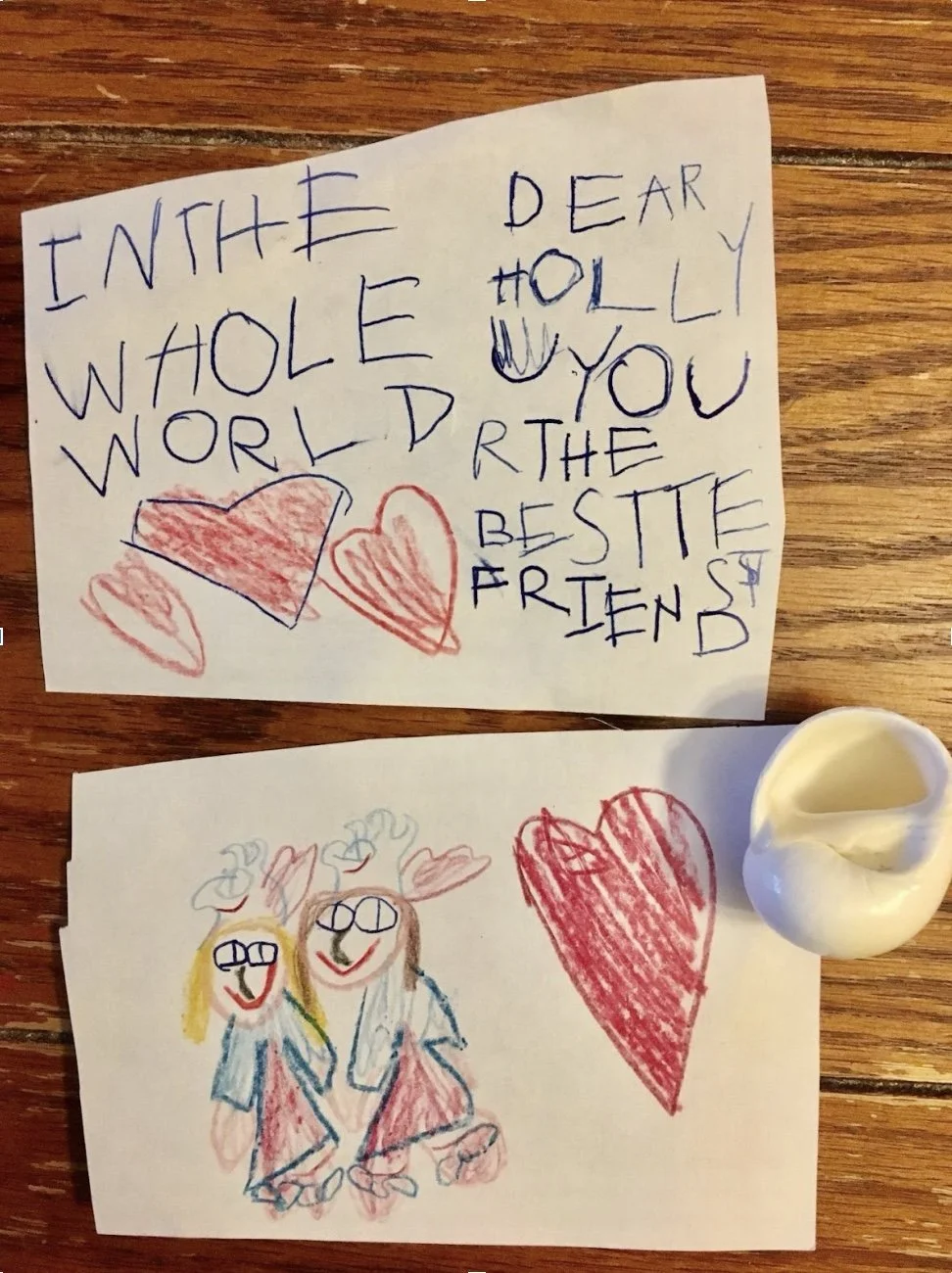
Valentine's Day and Beyond: Supporting Children's Social Growth
As a Child & Family Therapist Intern at Empower Family Therapy and mother of two school-age children, I've observed how school celebrations like Valentine's Day become important emotional touchpoints in children's lives. Through my professional training and personal experience, I've discovered these moments offer valuable insights into children's emotional development.
While parents may feel overwhelmed by the commercialization and pressure surrounding these celebrations, beneath the surface lies an opportunity to understand our children's social-emotional growth. When children deliberate over Valentine’s cards or navigate social expectations, they process deeper feelings about friendship, belonging, and self-expression.
In my play therapy sessions, I witness how these social experiences impact children throughout the year. Some express anxiety about meeting social expectations, while others struggle with the emotional intensity of the interactions. Through therapeutic play, children can process these feelings safely and naturally.

Even commercialized celebrations can become opportunities for emotional growth. By acknowledging our children's feelings—excitement, anxiety, or reluctance—we help develop their emotional awareness. Parents can support authentic connections by:
Letting children guide their participation level
Encouraging creative, low-cost expressions of friendship
Using experiences to discuss genuine relationships
Monitoring signs that children need extra support
While we can’t shield children from commercial influences, we can help them develop emotional tools to navigate these experiences authentically.
Here are some questions to ask your child that offer the opportunity to deepen the connection –
What made you feel proud today?
Did anyone do something that made you feel special?
Would you like to talk about anything that felt hard today?
How did it feel to give the Valentines to your classmates?
What do you think makes someone a good friend?
Written by Kelly Owen, M.S.
Child and Family Therapist Intern
If you’d like to learn more about supporting your child’s emotional development, contact us at hello@empowerfamilytherapy to explore how Play Therapy can help your child build lasting social-emotional skills.

How Can I Tell if My Child is Struggling with Mental Health Issues?

As parents, we know you want to ensure your children are thriving emotionally and mentally. However, recognizing when your child may be struggling with mental health issues can be challenging. Awareness is the first step in providing the support they need.
Signs to Look For
Changes in Behavior or Mood
Pay attention to any noticeable shifts in your child’s demeanor. This can include increased irritability, sadness, or mood swings that seem more extreme than usual.Withdrawal from Friends and Activities
If your child suddenly loses interest in hobbies they once enjoyed or starts avoiding social interactions, it may be a red flag. Isolation can indicate underlying emotional struggles.Declining Academic Performance
A sudden drop in grades or a lack of motivation towards schoolwork may suggest that your child is dealing with more than just academic challenges.Changes in Sleep or Appetite
Alterations in sleeping patterns (insomnia or oversleeping) and significant changes in appetite can be indicative of mental health issues.Physical Symptoms
Frequent headaches, stomachaches, or other unexplained physical complaints can often be manifestations of anxiety or stress.
When to Seek Help
If you notice a combination of these signs persisting over time, it’s important to take action. Trust your instincts as a parent. Seeking professional help can provide your child with the tools they need to cope. If you’re not sure if you should seek help yet, or have questions about if what you’re noticing with your child is ‘normal’, please reach out for a consultation with one of our highly trained child and family therapists.
Conclusion
Remember, being proactive is vital. If you’re concerned about your child’s mental health, reach out for support. Empower Family Therapy is here to help guide you and your family through these challenges. Our child and family therapists have immediate availability for new clients in our Oak Park, IL and Lincoln Park, IL offices, as well as virtually throughout the state of Illinois!

Child Therapy Services in Lincoln Park
Child Therapy Services in Lincoln Park

At Empower Family Therapy, we understand the unique challenge that parents face finding the best support and care for their children. Our dedicated team of child therapists in Lincoln Park is here to provide compassionate and effective support to your child, as well as help parents in how to best support their child at home. Our Lincoln Park office is designed as a space that children are not only comfortable, but a space they WANT to spend time in.
Why Choose Child Therapy?
Childhood is a critical period for emotional and psychological development. It’s also a formative time for parents who may be raising children for the first time and are eager to offer the best support they can to their child. Children may experience a range of issues, from anxiety and depression to behavioral problems and family dynamics. Early intervention through professional therapy can help address these challenges, promoting healthier development and long-term well-being. Starting your child in therapy at a practice that is child-focused is a great way to give your child a positive foundational experience of therapy so that they are comfortable returning to it in the future as needed.
Our Approach to Child Therapy
At Empower Family Therapy, we believe in a personalized approach to therapy. We tailor our services to meet the specific needs of each child and their family. Our methodologies include:
Play Therapy: Utilizing play to help children express emotions and resolve conflicts. Play is the Work of children, and is often an easier way for children to express themselves than verbal communication.
Family Therapy: Addressing family dynamics and improving communication to support the child's growth. Assisting parents in the child’s treatment so they are updates on progress and can help the child utilize skills at home and provide the best support.
Art Therapy: Allowing children to explore their feelings and thoughts through creative expression. Our Lincoln Park and Oak Park office both have dedicated space for our creative child clients. By creating a space that invites creativity children are encouraged to express themselves through art and feel comfortable in a new space with a new therapist.
Meet Our Team
Our team consists of highly trained, compassionate therapists with years of experience in working with children and families. In our Lincoln Park office, our child therapist Jen is a great fit for children and families new to therapy. Her kind and warm approach makes even the most reluctant child excited to return for the next session! We are dedicated to creating a safe and supportive environment for your child.
What to Expect
When you choose Empower Family Therapy, you can expect a thorough and compassionate approach to your child's care:
Comprehensive Intake: You will connect with our intake coordinator, Shala, who will help you find the therapist that is the best fit for you and has availability that matches yours. She’ll guide you through intake paperwork and consents and schedule your first appointment to meet your therapist.
Initial Appointment: Prior to your first appointment, your assigned therapist will reach out and introduce themselves via email. At your first appointment they will walk you through the consent forms and answer any questions you have about therapy or Empower Family Therapy. They will begin exploring what brings you to therapy and what your goals are.
Personalized Plan: Based on the consultation, we develop a personalized therapy plan tailored to your child's unique situation.
Ongoing Support: We provide ongoing support and regular updates to ensure your child's progress and adjust the plan as needed.
Family Involvement: We encourage family involvement in the therapeutic process to foster a supportive home environment and to make sure progress is sustained out of the therapy office.
Conveniently Located in Lincoln Park
Our practice is conveniently located in Lincoln Park/Old Town neighborhood, making it easy for families in the area to access our services. We offer flexible scheduling options, including evening and weekend appointments, to accommodate your busy lifestyle. Our office is centrally located and street parking is easily accessible.
Schedule a Consultation Today
If you're concerned about your child's emotional or psychological well-being, don't hesitate to reach out. Early intervention can make a significant difference in your child's life. Contact Empower Family Therapy today to schedule a consultation and take the first step towards helping your child thrive.

Telehealth or In Person Sessions?: The Best of Both Worlds

The demand for in person sessions is definitely back in our post-COVID world, especially for kids and families. But, we are seeing couples and adults asking for in person sessions more frequently too. The ongoing demand for virtual participation in people’s jobs and schooling still has many reluctant to agree to another Zoom meeting. But, the convenience of telehealth sessions is undeniable!
If you’re struggling to decide if in person or virtual is the best option for your therapy sessions- we have the perfect option for you: Hybrid Therapy!
Hybrid therapy allows clients to meet their therapist in person and then switch to telehealth sessions for the majority of future sessions. It offers the opportunity to meet back in person as needed or wanted.
Hybrid scheduling offers the best of both in person and virtual therapy options. It offers the convenience and accessibility of telehealth, without skipping out on the personal touch and traditional model of office-based sessions. Clients who engage in hybrid scheduling report feeling just as connected to their therapists as those that choose in-person only scheduling.
By offering both virtual and in-person therapy options, hybrid therapists can accommodate the diverse needs and preferences of their clients, ultimately enhancing accessibility and effectiveness of mental health services.
If you’re interested in hybrid scheduling with a therapist on our team, reach out and let us know and we will get you connected to a therapist with availability that matches yours!
We are offering hybrid scheduling (virtual and in person sessions) for couples, families, kids, and adults in both our Oak Park and Chicago Lincoln Park/Old Town office!

Navigating Parenthood Together: The Importance of Assessing Parenting Styles

Have you ever found yourself in a relationship where the arrival of a child was expected to bring joy, but instead, it brought unexpected tension and stress? Often, this shift can be attributed to the differing parenting styles that each partner brings into the dynamic. In this article, we'll explore the significance of assessing and understanding parenting styles for a more harmonious and united approach to raising children.
Insight:
Assessing parenting styles offers valuable insight into the unique perspectives each parent holds when it comes to raising their child. For instance, a clash may arise if one partner leans towards an authoritarian approach while the other tends to be more permissive. The fundamental differences in their beliefs about punishments and consequences can create tension, especially when discussing disciplinary matters.
Awareness:
Parenting styles are often shaped by individual childhood experiences, either mirroring or contrasting with one's own upbringing. Reflecting on these experiences can lead to a conscious decision to either align with or deviate from parental values. For example, someone who had overly strict parents may become a permissive parent as a response to their own unpleasant childhood. Understanding these influences is crucial, as it helps partners comprehend and navigate each other's parenting perspectives.
Unity:
Increased insight and awareness pave the way for couples to work together in creating a unified parenting approach. Acknowledging and accepting differences is a step towards harmonizing conflicting styles. In cases where emotions run high, seeking the guidance of a clinician trained in childhood development and parent-child relationships can be immensely beneficial. A skilled professional can assist in fostering unity, offering strategies for healthy child development, and helping the couple develop a cohesive parenting strategy.
Love:
In situations where limited insight and awareness lead to disunity, couples might mistakenly attribute their differences to a lack of love. As a therapist, I have witnessed numerous couples on the verge of giving up due to parenting-related conflicts. However, seeking professional help and developing a healthier parenting style can be a transformative journey. There is hope for couples to overcome these challenges, decrease tension, and rediscover the love that brought them together in the first place. Parenting, when approached with understanding and unity, can strengthen the bond between partners and create a nurturing environment for their children.
Blog By Dr. Yolanda Angelica, MA, LPC, MBA
Couple & Family Therapist, Art Therapist
If you’re interested in working on further exploring your parenting styles in therapy with Dr. Yolanda Angelica please Contact Us for her current availabilities.

"How Should We Parent Our Child?"

As couples embark on the journey of parenthood, a myriad of concerns and questions arise. One of the pivotal questions that often surfaces is, "How should we parent our child?" Surprisingly, many couples venture into parenthood without a solid understanding of parenting styles, laying the groundwork for potential challenges. In this exploration, we delve into the various parenting styles and their implications on child development.
Uninvolved Parenting
The uninvolved parent adopts a hands-off approach, providing minimal active support, setting few rules, and lacking proper monitoring. Operating under the belief that "kids will be kids" and "they will learn from their mistakes," parents of this style often grapple with mental health issues or substance abuse. Factors such as financial concerns, household management, or a lack of knowledge about child development contribute to this parenting style. Unfortunately, children raised in this environment often exhibit frequent behavioral problems and, as adults, may grapple with unhappiness.
Permissive Parenting
The permissive parent assumes more of a friend role than a traditional parent role, trusting their child to make the right decisions. This approach may stem from the parent's own childhood experiences. While encouraging open communication, permissive parents struggle with enforcing consequences for misbehavior. Children raised in this environment often display behavioral problems, heightened sadness, and low self-esteem.
Authoritarian Parenting
The authoritarian parent adheres to strict rules without exceptions, asserting, "It is my way or the highway" or "Because I said so." This parenting style is often inherited from the parent's own upbringing, prioritizing pure obedience over negotiation or concern for the child's feelings. Punishments are commonplace in this style, leading children to grapple with hostility, aggression, and the potential development of dishonest behavior to avoid punishment.
Authoritative Parenting
The authoritative parent strikes a balance by establishing clear rules with reasonable exceptions. Their motto is "I care, and I will give you the freedoms you have earned, but for safety-related issues, you will do as I say." These parents draw from their knowledge of child development, either through therapy or their own balanced upbringing. Logical consequences are employed to teach valuable life lessons. Children raised with this parenting style often evolve into responsible adults who confidently express their opinions.
Conclusion
Understanding the nuances of parenting styles and their impact on children is the initial stride toward fostering healthy parenting dynamics. While many parents aspire to provide a well-balanced approach, assessing and enhancing parenting styles is a crucial step. To gain deeper insights and facilitate healthier parenting, reach out to our clinicians for a comprehensive assessment. For further understanding, explore our article titled "Parenting Styles: Why is it important to assess parenting styles?" Taking these steps ensures a supportive and nurturing environment for both parents and children alike.
Blog By Dr. Yolanda Angelica, MA, LPC, MBA
Couple & Family Therapist, Art Therapist
If you’re interested in working on further exploring your parenting styles in therapy with Dr. Yolanda Angelica please Contact Us for her current availabilities.