

Therapy Insights on Parenting, Couples, and Mental Health

5 Reasons Why Telehealth Therapy is Ideal for Couples Counseling

Connecting via virtual platforms in a post-COVID world is here to stay. Chatting with friends over FaceTime or joining the team meeting on Zoom rather than the conference room is the new norm. Telehealth counseling has proven to be a game-changer in the world of mental health treatment. Although most people are feeling safe enough to return to in person sessions in a traditional therapy office setting, many are still choosing to join their weekly therapy appointment virtually instead- especially couples.
1. Accessibility and Convenience:
One of the primary advantages of telehealth therapy for couples is its unparalleled accessibility and convenience. Couples no longer need to factor in the time it takes to commute, find parking, or navigate time off from work or home responsibilities. With telehealth, sessions can take place from the comfort of the couple's own home or any location of their choice. This eliminates the stress of travel, making it easier for busy couples to prioritize their mental health with less disruption to their busy schedules.
2. Flexibility in Scheduling:
Traditional in-person therapy often involves fixed appointments, which can be challenging for couples with hectic schedules. Telehealth therapy offers greater flexibility in scheduling, allowing couples to choose time slots that work best for both partners. Due to differing schedules, many couples join their sessions from different locations- one may be at the office while another is at home or their own office. This flexibility ensures that therapy fits seamlessly into their lives, increasing the likelihood of consistent attendance and commitment to the process.
3. Overcoming Barriers:
Couples seeking therapy may face obstacles such as trouble finding a provider who takes their insurance and has availability, transportation issues, mismatched schedules, mobility issues, or health concerns. Telehealth eliminates these barriers, making various therapies accessible to a broader range of individuals. A virtual therapy option is especially valuable for those that would prefer to join therapy with more physical space: like co-parents, those going through a separation or divorce, and couples where one person travels often. Telehealth therapy options ensure that couples can engage in therapy without less obstacles.
4. Enhanced Comfort and Safety:
The familiar environment of one's own home often fosters a sense of comfort and security. This can be particularly beneficial in couples therapy, where open and honest communication is crucial. Telehealth allows partners to engage in therapy in a space where they feel safe, contributing to a more relaxed and open dialogue. Virtual therapy options facilitates meaningful connection for those that may not feel comfortable sharing physical space, or may not have much flexibility in their schedule to both attend an in person meeting.
5. Continuity of Care:
In situations where couples may need to relocate, travel, or have changes in their work schedules maintaining continuity in therapy can be challenging. Telehealth eliminates the need to find a new therapist in a different location, ensuring that couples can continue their therapeutic journey seamlessly (as long as the couple is still living in the state where the therapist is licensed). This continuity is crucial for ongoing progress and the success of couples therapy.
The rise of mental health needs and offerings is an exciting time to rethink the traditional format of therapy. Telehealth therapy stands out as a powerful tool for couples seeking to strengthen their relationships. The accessibility, convenience, flexibility, and continuity of telehealth make it an ideal choice for couples therapy, breaking down barriers and creating a more flexible and consistent environment for couples on their journey to a healthier and happier relationship.
If you’re interested in learning more about whether virtual therapy is a good fit for you, and be connected with one of our therapists with virtual availability please Contact Us today.

How Long Does Therapy Take to Work? The 6 Factors That Effect Your Therapy Timeline
Introduction:

One of the questions people ask me the most about therapy is how long it usually takes to work. It’s scary to start something new, especially something like therapy, where you don’t know what to expect or how long you’ll be committing to this weekly meeting. Although it’s a tough question to answer and greatly depends on the person and the situation, there are a few important factors that contribute to how long therapy takes to work. By gaining insight into these factors, you can set realistic expectations and make the most of your therapy experience.
1. Understanding the Therapeutic Process:
Therapy is a journey of self-exploration and growth, and it is important to recognize that it is not a quick fix. The duration of therapy varies based on several factors, including the nature of the issue being addressed, your commitment to the process, and the therapeutic approach used by the therapist. The most important thing to keep in mind is that the therapeutic process is not a cookie-cutter, one-size-fits-all approach. Sometimes people explore the same topics in therapy with different therapists, using different approaches, at different stages of life.
2. Nature of the Issue:
The complexity and severity of the issue being addressed play a significant role in determining the length of therapy. Short-term concerns like stress management or adjustment difficulties may require fewer sessions. On the other hand, complex and longstanding issues such as trauma, chronic anxiety, or marital and family issues might require longer-term treatment spanning several months or even years. Most of the couples we see in marriage counseling have long-standing patterns of communication that take a while to learn and implement new skills to make changes in their interactions.
3. Individual Factors:
Every individual is unique, and the rate of progress in therapy can vary greatly. Personal motivation, readiness for change, emotional resilience, and support systems are among the factors that can impact the speed at which therapy produces noticeable results. Additionally, your level of engagement and active participation in therapy sessions can significantly influence the pace of progress. The best way to expedite your therapy experience is by focusing on doing the therapeutic homework and practicing the skills between your sessions.
4. Therapeutic Approach:
Various therapeutic approaches are utilized by mental health professionals, such as cognitive-behavioral therapy (CBT), psychodynamic therapy, and mindfulness-based therapy. Each approach has its own set of techniques, goals, and timelines. For example, CBT is typically more structured and time-limited, often showing results within a few months. On the other hand, psychodynamic therapy may involve a longer-term commitment to achieving deeper insights and lasting change. If you’re exploring the idea of starting therapy, ask the therapist how long their approach usually takes or how long her other clients with similar situations are in therapy.
5. Frequency and Duration of Sessions:
The frequency and duration of therapy sessions greatly impact the overall timeline. Regular, consistent attendance allows for continuity and momentum in the therapeutic process. Typically, therapy sessions are scheduled on a weekly basis, but some individuals may benefit from more frequent sessions during critical periods or choose less frequent sessions as they begin reaching their goals and seeing progress. To see success in therapy, you must be willing to prioritize the appointments in your schedule and stay committed to attending.
6. Collaboration with the Therapist:
A strong therapeutic alliance and open communication between you and your therapist are crucial for the therapy's success. Research shows that the quality of the therapeutic relationship is the biggest predictor of therapeutic success—more so than their years of experience, therapeutic approach, or how much they charge! Collaborating with your therapist, setting realistic goals, and actively participating in the process can optimize the effectiveness of therapy and accelerate progress.
Conclusion:
While it is impossible to provide an exact timeframe for therapy, understanding the factors that influence its duration can help manage expectations and make the new experience more approachable. The length of therapy varies based on the complexity of the issue, individual factors, therapeutic approach, frequency of sessions, and the collaborative effort between you and your therapist. Patience, commitment, and open communication are key to experiencing positive outcomes. Remember, by investing in your mental health and seeking the support of therapy, you are taking an important step toward improving your well-being, your relationships, and your happiness.
If you're considering starting therapy or if you have questions about the therapeutic approaches of the therapists on our team, I encourage you to fill out the inquiry form on our website to make that meaningful step towards a better you!

The Pros & Cons of Working with Therapist Intern
There’s a lot to consider when it comes to seeking out a therapist. Who’s going to be the best fit? Who am I going to feel comfortable with? But most importantly, who’s going to be able to help me make the changes I am looking for?
We know firsthand how difficult it can be to make the jump to pursue therapy, and how much is riding on the connection with your therapist being a good fit.
In this video, Tina Shrader, the founder of Empower Family Therapy, breaks down ALL the pros & cons of working with a therapist intern.
During this video she mentions Empower’s three therapist interns: Isabelle, Annie, and Isabel. All three are taking new clients and have immediate availability! You can read their bios under the staff tab heading at the top menu bar. They are all in network with BCBS PPO & Cigna, and offer sliding scale sessions at $25 per session!
Fill out the Contact Us form and mention their name to take the next steps towards reaching your goals and finding your perfect therapist fit!

Pride Month: Children's Books & Art Activities

In this progressive world where uniqueness of others are celebrated and inclusivity are the values our society upholds, how can we continue communicating with children on how to be accepting of others and what can we learn as an adult throughout the process?
Every June, Pride Month is celebrated all over the world and is an important conversation to keep open and simple with younger children. Pride Month is about affirming others and ourselves the choices made regarding identity. As children continue to grow and explore parts of themselves, parents can help guide those conversations when it comes to gender identity through open-ended conversations, books, and even through art!
Below are four books I highly recommend to read with your child as they all focus on main themes of Exploration/Self-Acceptance, Celebrating Families, and LGBTQia+ General Education/History. I’ve highlighted what topics are discovered along your reading journey and have included a fun art-making activity to do together with your child for further exploration and discussion.
These books and activities are meant to continue building the bond between you and your child, promote and practice open communication, and allow time for you both to reflect, explore and affirm identities within yourself and others.
Remember, this is meant to be a fun experience with your child in creating new memories together as you both learn and grow!
Pride Colors by Robin Stevenson (2019)
This brightly colored board book teaches your younger toddler the LGBTQia+ pride color meanings and how they each symbolize the spirit of Pride Month: Acceptance and love. Accompanied by beautiful lifestyle photographs and validating statements, this board book helps builds a bond between the parent/caregiver and child through teaching unconditional love.
Art Project: My Special Rainbow
Supplies: Colored construction paper of each pride color (Red, Orange, Yellow, Green, Blue, Purple), Markers, Colored Pencils or Crayons
Intention: Open conversation with children, self-exploration and self-expression of their identity, likes, relationships, and coping skills
Directions/Prompts:
For each color and what they symbolize, have a conversation with your child with the below questions/prompts and have them draw/doodle or write 1-2 things for each question
Red means “Life”
Who are people in your life that you really love?
What are things in your life that you enjoy doing?
Orange means “Healing”
Which of your toys bring make you feel better when you feel sad/angry/upset?
What do you like to do to make yourself feel better? (i.e. draw, listen to music, play a game, hug someone)
Yellow means “Sunlight”
Who in your life brings you happiness?
What do you like to do outside on a sunny day?
Green means “Nature”
What are your favorite trees/flowers?
What do you like to do outside?
Blue means “Peace & Harmony”
When you’re feeling sad/angry, what can do you do stay calm? (i.e. belly breathing)
What does calm look like to you? (i.e. prompt with a shape or a line)
Purple means “Spirit”
How do you like to show off your school spirit?
What are things that you like about yourself?
How do you and your friends/family show spirit?

This Day in June by Gayle E. PItman (2014)
A more in-depth look at what a Pride celebration is all about, this book walks parents and children through a colorfully illustrated educational approach. With whimsical illustrations, the readers are given an inside look into a Pride celebratory parade, what each visuals on banners represent and symbolize, and teaches the respect and acceptance of others. Caregivers/Parents are given information on how to talk to children about gender identity and sexual orientation in age appropriate ways.
Art Project: My Own Pride Celebration
Supplies: You will need access to the illustrations of this book and the reading guide at the end of the book, A large sheet of paper, Markers, Colored Pencils or Crayons
Intention: Education and learning of the different pride symbols and history
Directions/Prompts:
Have your child go through each page of illustration and choose 1-3 favorite items/person/visual from each page and recreate/doodle/draw it on the sheet of paper to create their own collage. Ask them questions like, “if you were to create your own Pride celebration parade, what would you like to be there?” With the reading guide at hand, look up the meaning and symbolism together to discuss its meaning.
Call me Max by Kyle Lukoff (2019)
Focused on the transgender experience, this book highlights the challenges a transgender individual may experience. It is meant to provide comfort for those who may be going through similar experiences and not feel alone or isolated. Built upon open conversations regarding the different ways boys and girls are treated in our society, this book cultivates a sense of acceptance of self. The last line, “Being a boy isn’t better than being a girl, but being myself is the best” encompasses the heartfelt approach in learning how to accept ourselves despite what others may label us as.
Art Project: I accept me for me!
Supplies: Kid appropriate magazines to cut out from (or googled printed images), large sheet of paper, glue sticks/glue, scissors
Intention: Exploration of identity, promotes positive self-esteem
Directions/Prompts:
Using kid appropriate magazines or googled images, have your child create a collage that best represents their unique self. Ask them the following questions”
What are things you like?
What are things that make you special?
What are things that make your family one of a kind?
What are things that bring you joy/happiness?
Heather has Two Mommies by Leslea Newman (2015)
Families come in different shapes, sizes, and so forth. As children grow, they learn from their peers at school the types of families others may have and it may look drastically different from theirs. Sometimes they may question how their own family looks like as they are in a developmental time of comparing themselves/what they have with others. This book provides guidance on celebrating all types of families no matter what. Specifically for Pride Month, this book normalizes having parents of the same gender and focuses on the positive aspects of what having “two” of something can bring to one’s life.
Art Project: Celebrating my Family
Supplies: Multiple sheets of paper, Markers, Colored Pencils or Crayons
Intention: Exploration of family members and dynamics
Directions/Prompts:
Using a sheet of paper for each prompt listed below, have your child draw/write their answers and have an open discussion to explore their viewpoints of their family:
Draw a picture of your family members. Who do you consider to be family? What does family mean to you?
If each of your family member was an animal, what would they be and why?
For each family member, draw/write what they like.
Draw your family in your home or doing something you all like to do together (i.e. playing board games, watching movies, going for a walk)
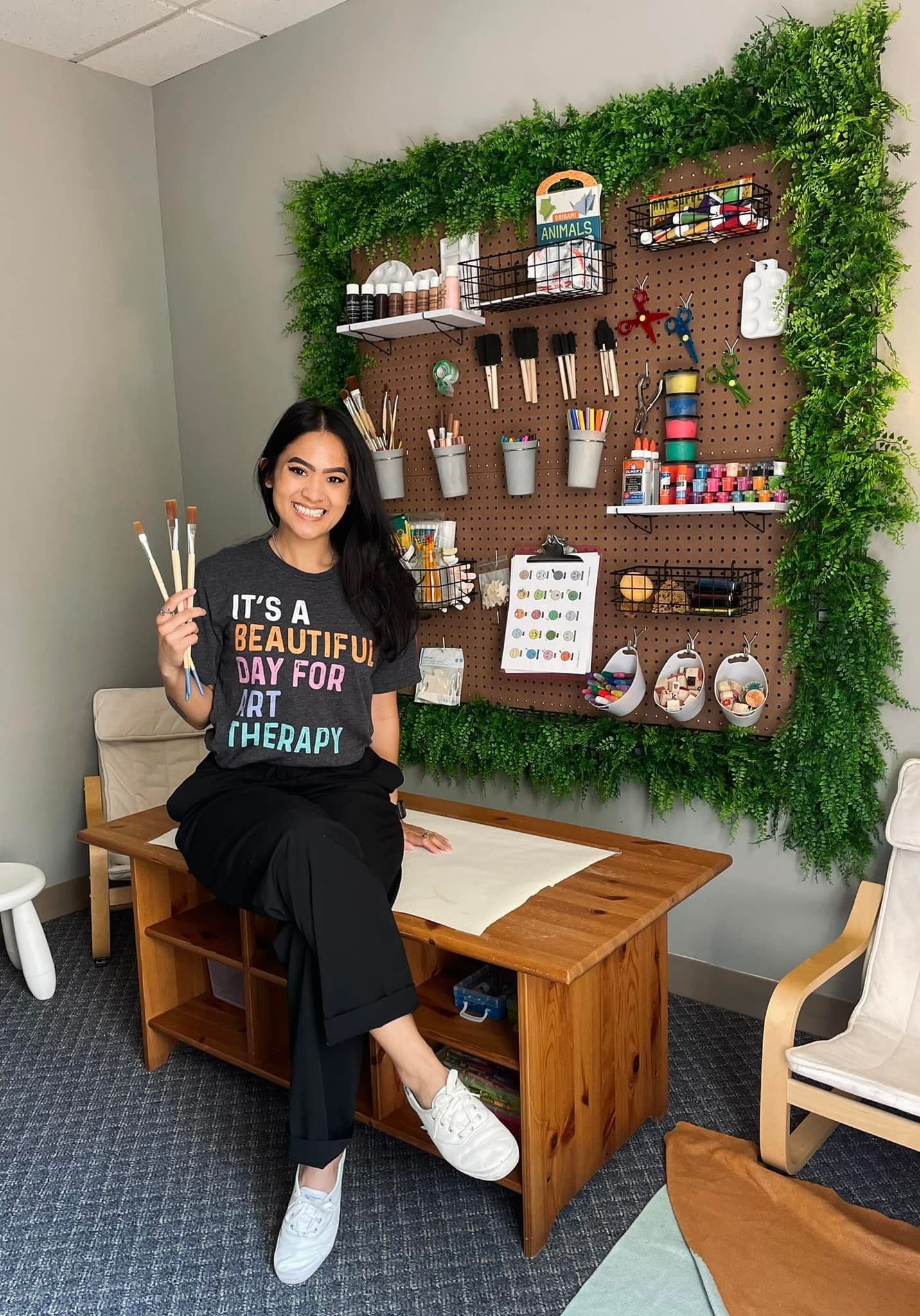
Elisha-Rio is the author of this blog post.
She is an art therapist who works with children, youth, young adult, and parents.

Breaking the Chain: How to Identify and Overcome Negative Relationship Patterns
Recognizing the Pattern
Imagine it’s Tuesday night, and you’ve had a long, stressful day—perhaps you’ve been juggling work, managing the kids, or balancing extracurriculars. Tensions are running high, and before you know it, a fight starts to brew. This is a pattern. It’s not just the stress of the day; it’s a cycle that’s repeating itself.
What happens next is crucial. When couples start noticing these patterns, they often realize that the triggering event—the thing that sets off the pattern—doesn’t just happen on Tuesday night anymore. Once the pattern becomes repetitive, it starts to sneak up earlier in the week. What once was a Tuesday night tension build-up might start on Monday morning—or even Sunday night.
This means that the trigger isn’t just the stress of the day anymore. It’s the anticipation of that stress, which builds earlier in the week. And this can leave both partners feeling confused, unsure of why the tension is building before the usual trigger even appears.
Small Triggers, Big Reactions
Let’s take another example. Maybe your child has a stuffy nose, and you’ve noticed over time that this leads to restless nights. At first, it might have been just a minor inconvenience, but over the past few months, it’s become a much bigger deal. Now, when you hear that first sniffle or sneeze, the anxiety starts to rise. It’s no longer the sleepless night itself that causes the reaction; it’s the first sign of illness that brings it all back.
What happens here is that the emotional response gets tied not just to the present moment but to a larger pattern that has built up over time. You might not even fully understand where the anxiety is coming from in the moment. What seems like a small issue, like a child’s sniffle, becomes the cue for a much bigger emotional reaction because it’s part of an ongoing cycle that’s been triggered.
How to Break the Pattern
Let’s talk about how to break free from these patterns. This is where therapy can make a huge difference. In therapy, you gain an outside perspective, which is invaluable when trying to understand what’s going on in your relationship. A therapist can help you zoom out and ask things like, “What was really going on Monday night?” or “What exactly triggered that reaction?”
Once you have that clarity, you can disrupt the pattern. The first step is shining a light on it. The more clearly you can identify the pattern—what it looks like and when it typically occurs—the less power it will have over you. It’s like taking the pattern out of the shadows and bringing it into the light. This makes it easier to manage and change.
Intentional Disruption of the Pattern
One of the most effective ways to break a pattern is by intentionally disrupting it. With couples, I often start by helping them get crystal clear about what the pattern looks like. When we’re able to name the pattern and really understand its dynamics, we can begin to intervene and shift the course. This may involve recognizing the first signs of the pattern and using tools to respond in a healthier, more constructive way.
Taking Control and Breaking the Cycle
The key is to address the pattern early on. Once you become aware of the triggers and the emotional reactions that follow, you can start to take control of the situation. Instead of waiting until the tension explodes on Tuesday night, you can notice it starting to build on Monday morning or even Sunday evening. This early recognition gives you the chance to respond differently and to de-escalate the situation before it gets out of hand.
Understanding these patterns, especially with the help of a therapist, helps you and your partner break free from the emotional rollercoaster. By bringing the pattern into the light, you’ll be able to replace old, negative reactions with healthier ways of communicating and handling stress.
Ready to Break the Cycle?
If you’re noticing patterns like this affecting your relationship, it’s time to take action. Recognizing and addressing these patterns will help you move beyond the emotional highs and lows and create healthier, more stable connections. By identifying the pattern, understanding the triggers, and learning how to respond more constructively, you can transform your relationship.
Are you ready to take the first step toward breaking free from these cycles and building stronger, more positive relationships? Start by recognizing the patterns and taking proactive steps to create the change you want. Therapy and self-awareness are powerful tools that can help you navigate these challenges and build deeper, more fulfilling relationships.
If you have any questions or would like to learn more, we'd love to hear from you. Let’s start breaking those patterns today!

A One Year Review on the Impact of COVID on Couples
If you used to complain you and your honey didn’t have enough time together, this past year most likely has your foot in your mouth. But, if you’re still feeing distant from your partner even though they’re mere rooms away from you at all hours of the day- you’re not alone! This past year has been quite a social experiment for couples, on how to stay connected when you’re always together. Tina shares some easy tips on how to keep things feeling fresh, after a year on top of each other (and not in the good way!)

The Hidden Dangers of Avoiding Conflict in Front of Children
A lot of the time, I hear couples say that they have a rule in their house that they don’t fight in front of their kids. While that’s an ambitious goal, it doesn’t always work out as intended. The effort to shield kids from conflict can sometimes backfire, leading instead to increased emotional stress.
How Bottled-Up Emotions Create Family Tension
When couples bottle up their emotions to avoid conflict in front of their children, it builds up stress and tension. Kids are incredibly perceptive and can sense the underlying emotional energy. Over time, this suppressed stress may erupt in a blowout fight that is much larger than if the issue had been addressed earlier.
The Difference Between Avoiding Conflict and Fighting Fair
It’s important to understand that avoiding conflict entirely isn’t the solution. Instead, there’s a crucial difference between dodging disagreements and engaging in healthy, fair fights in front of your kids. Managing what your children see—and how they perceive your stress—is key. Addressing bigger issues when the kids aren’t around can work, but only if done in a balanced and timely manner.
Embracing the Concept of Fighting Fair in Your Home
Instead of completely avoiding conflict, couples should focus on fighting fair in front of their children. This involves setting up family rules that promote respect and dignity during disagreements. Such guidelines not only help resolve differences in a healthier way but also teach children the importance of fairness and accountability within the family.
Modeling Healthy Emotional Expression for Your Kids
Children learn by watching their parents—“monkey see, monkey do.” Demonstrating that it’s okay to feel frustrated or angry, as long as those emotions are expressed constructively, can have a lasting impact. By fighting fair, you show your kids that while it’s natural to experience strong feelings, managing and resolving them respectfully is what truly matters.
Recognizing and Repairing When Fights Escalate
There will be times when a disagreement crosses the line from fair fighting to something more hurtful. Recognizing this and taking immediate steps to repair the situation is critical. Whether it’s a quick apology or a more in-depth discussion later, repairing the relationship in front of your children reinforces that conflicts can be resolved healthily.
The Critical Role of Conflict Repair in Family Relationships
Often, couples may have a significant fight, cool off separately, and then reconcile once the children are asleep. However, this leaves a gap in the learning process. When kids wake up and everything seems fine, they miss the vital lesson of witnessing how conflict is repaired and relationships are mended. This repair process is key to teaching children that conflicts, while inevitable, can be resolved constructively.
Practical Steps to Repair and Reconnect
If you’re not already practicing conflict repair, now is the time to start. Whether it’s staging a brief, honest conversation in the morning or simply acknowledging the previous night’s disagreement, demonstrating repair helps your kids see that amends are always possible. A simple statement like, "We had a fight last night, but we talked it through, and everything is okay now," can make a world of difference.
Building a Resilient Family Through Healthy Conflict Resolution
Ultimately, it’s perfectly okay to have disagreements in front of your kids—as long as you handle them in a healthy, constructive way. By creating clear family rules around conflict, modeling respectful emotional expression, and emphasizing the importance of repair, you equip your children with essential life skills. These practices build a resilient, empathetic family dynamic where every member learns the value of honest communication and mutual respect.
Pro Tip: Quick Morning Repairs for Lasting Impact
For a lasting impression, consider staging a quick repair the next morning after a conflict. Acknowledging the issue with a brief conversation not only resolves lingering tension but also demonstrates to your kids that even after heated moments, relationships can be mended and strengthened.
I hope this helps! If you have any questions about fighting fair or if you're interested in sharing your family's rules about conflict resolution, feel free to reach out.

Bridgerton & Couples Counseling: A Session with Duke & Daphne
Bridgerton and Relationship Communication: What Daphne and the Duke Get So Wrong
A Couples Therapist Breaks Down Miscommunication, Expectations, and Emotional Disconnect in the Hit Netflix Romance
If you’ve ever watched Daphne and Simon spiral through miscommunication, emotional shutdowns, and “wait, you didn’t tell me you didn’t want kids?” moments—then you already know. This couple needs therapy.
As a couples therapist, I couldn’t help but notice all the ways they were missing each other. And spoiler: it’s not just about plot twists. It’s about unspoken expectations, emotional avoidance, and a total lack of communication skills in their marriage.
If they were in my office, here’s where we’d start:
Unpacking unrealistic relationship expectations
Naming and expressing emotional needs
Learning healthy conflict resolution skills
Getting clear about parenting decisions and shared values
The biggest red flag? They were trying to meet each other’s needs without ever actually talking about them. That’s how resentment builds. That’s how connection dies.
In this video, I break down:
Why Daphne and the Duke’s love story is a communication cautionary tale
What emotional misattunement really looks like (spoiler: it’s not just dramatic music and carriage rides)
How you can apply real couples therapy tools to fictional and real-life relationship patterns
Where are they missing each other? And how can we stop doing the same thing in our own relationships?
👇🏽 Hit play below. Let’s talk Bridgerton—therapist style.

The 3 Reasons Why You’re Probably NOT Having Lots of Sex During COVID
Why You’re Not Having More Sex During Quarantine (Even Though You’re Home Together)
Understanding Low Libido, Relationship Burnout, and Emotional Disconnection
You’ve been home more this past year than ever before.
No more late-night meetings. No endless birthday parties or school pickups. You and your partner are under the same roof 24/7... so why does sex feel like it’s disappeared?
When quarantine first hit, a lot of couples imagined a cozy, connected vibe—slow mornings, more cuddles, maybe even a sparkier sex life. But here’s what actually happened:
Our nervous systems got overloaded.
Our identities blurred.
And the space where desire used to live got crowded out by Zoom calls, exhaustion, and survival mode.
Desire doesn’t live in burnout. It needs room.
Room to feel like you. Room to want, not just to cope.
So if you’ve been feeling off—disconnected from your body, your partner, your spark—this isn’t a failure. It’s a totally human response to an ongoing crisis.
In the video below, I break down three big reasons your sex life might feel stalled right now—and why that makes total sense. No shame. Just real talk, neuroscience, and a few gentle truths to help you breathe a little easier.

Why do Love Languages Matter?
You know the Five Love Languages: quality time, acts of service, gifts, words of affirmation, physical touch, and gifts. But, beyond knowing what yours and your partner’s preferred love languages are these are important to keep in mind for the long-term success of relationships.
Staying focused on your partner’s love language ensures that your efforts to show them your love and appreciation will be well received. Knowing these preferred methods of showing love encourage that displays of love do not get impacted by the ebbs and flows of life- it ensures your acts of love can stay consistent even when life gets chaotic.

Individual vs. Couples Therapy: Where do I Start?
Tina addresses a common question from from new clients: “should I start with individual therapy or couples therapy?” and offers some things to consider as you explore your personal situation.
She also addresses why getting ALL the therapists may not be the best strategy, and why it’s so important to get help for a problem as early as possible.
She adds how to seek therapy for a relational issue, even if your partner is not interested in couples therapy.
Finally, she shares insight into how the role of a therapist changes in an individual session vs. a couples session.

Why Benefit of The Doubt is Critical for Long-Term Relationships
In long-term relationships, couples often develop a pattern of thinking that they know their partner inside and out. They assume they understand how their partner will respond to situations, what they’re thinking, and what they’re feeling. This assumption, or mind reading in relationships, can lead to problems, especially when it shapes our behavior or decisions.
When we make assumptions in relationships, it can create unnecessary relationship narratives that cause us to misinterpret our partner's intentions. These dominant narratives can swallow up many situations, turning small issues into larger conflicts than they need to be. This can erode relationship trust and understanding, leading to more tension and frustration.
Couples who don’t give each other the benefit of the doubt in relationships often fall into a dynamic of vigilance in relationships or relationship defensiveness. Why does this happen? It’s because both partners feel the need to constantly explain themselves or defend their actions. They fear their partner will assume the worst about their intentions, which can make them feel unsupported. Without this vulnerability in relationships, it’s difficult to feel emotionally close or secure.
On the other hand, couples who practice giving each other the benefit of the doubt tend to have healthier relationship dynamics. They feel more comfortable being vulnerable with one another because they know their partner will listen and seek to understand, rather than jumping to conclusions. They create a sense of safety in relationships, which is crucial for emotional intimacy.
How to Practice Giving Your Partner the Benefit of the Doubt
Sometimes shifting our mindset isn’t easy, but it’s a valuable tool for improving relationship communication. One way to start practicing the benefit of the doubt is by questioning an assumption before acting on it.
For example, one of my clients, let’s call her Sarah, was upstairs getting ready for work while her husband, Tom, was downstairs with their kids. Sarah could hear Tom on his phone while the kids were getting rambunctious. In her mind, she assumed that he was not paying attention to the kids and that even though they were on different floors, he was expecting her to handle the situation.
When the kids started screaming, Sarah assumed it was because Tom was distracted. But before reacting emotionally, I encouraged her to question her assumption and confirm what was really happening.
Instead of rushing downstairs to react, I advised Sarah to approach the situation with curiosity, not defensiveness. When she went downstairs, she discovered that Tom was actually in the bathroom and couldn’t manage the situation with the kids.
Had she reacted right away, it would have confirmed her assumptions and relationship conflict that Tom couldn’t do anything right, while also reinforcing his belief that he was never doing enough. This could have led to unnecessary relationship misunderstandings and further relationship defensiveness.
The Power of Relationship Trust and Understanding
The point here is that assumptions can quickly gain momentum and start to define the relationship narratives we hold. When these narratives become dominant, they can distort how we see our partner and impact our emotional responses. Sarah’s reaction would have made Tom feel like he was always in trouble, even though he wasn’t at fault. This highlights how crucial it is to build trust in long-term relationships by questioning assumptions before reacting.
By taking the time to confirm what’s happening before responding, you can avoid escalating a situation based on incorrect assumptions. This simple practice leads to improved emotional responses in relationships and reduces the chances of defensiveness taking hold.
For couples who struggle with assumptions and overcoming relationship assumptions, learning how to handle relationship misunderstandings is key. When you start to question your assumptions and communicate more openly, the relationship becomes stronger. You create a space where both partners can feel heard and understood, instead of jumping to conclusions that could lead to conflict.
How to Build a Stronger Relationship Through Communication
Practicing the benefit of the doubt in relationships is an effective way to improve communication in relationships. When partners take the time to listen and verify before reacting, it creates a much stronger bond built on understanding and trust. Over time, this strengthens the relationship and creates an environment of emotional safety.
Conflict resolution in relationships often starts with giving your partner the benefit of the doubt. Instead of assuming the worst, approach each situation with the intention of building trust and connection. This can lead to greater relationship trust and understanding, and ultimately, a stronger, healthier relationship.
So, before responding emotionally, question your assumptions. Take the time to understand your partner’s perspective and intentions. This small shift can bring about significant change, not just in how you communicate, but in how you connect emotionally. Practicing this consistently will help you build a stronger, more resilient relationship.
If you have any questions about relationship advice for couples or relationship communication tips, feel free to reach out.